Methane

Methane is a greenhouse gas, emitted both by natural sources and from human activity. Methane is also the largest component of natural gas, the product that companies sell. Operators have every incentive to capture and sell as much of this product as possible to American consumers, rather than letting it escape into the atmosphere. And independent oil and natural gas producers have made great strides in reducing our carbon footprint by cutting emissions without raising energy costs.

In fact, the United States leads the world in the reduction of carbon emissions, even as the production of U.S. oil and natural gas continues to increase. Our success in lowering carbon emissions in the United States is not because of additional regulations, but because of the increased use of clean-burning natural gas.

IPAA recognizes the need for environmentally sound, cost-effective regulations to match industry emissions. Industry seeks to find a regulatory pathway designed for the sources it regulates. Big new oil and natural gas wells and low producing older wells have differing emissions profiles. Our members are making constant improvements to the technology being used to reduce, measure and report on emissions.

You can find IPAA’s methane-related comments in the ‘Recent Actions and Press Releases’ section on this page.

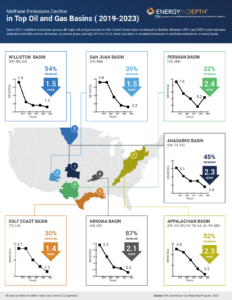
Methane Emissions Continue to Decline Across U.S. Oil & Gas Basins

IPAA endorses The Environmental Partnership, a voluntary program comprised of companies in the U.S. oil and natural gas industry committed to continuously improving the industry’s environmental performance. It includes companies of all sizes, including many of the country’s major oil and natural gas producers. Learn more about the program at www.theenvironmentalpartnership.org.

Fact Sheets and Policy Briefs

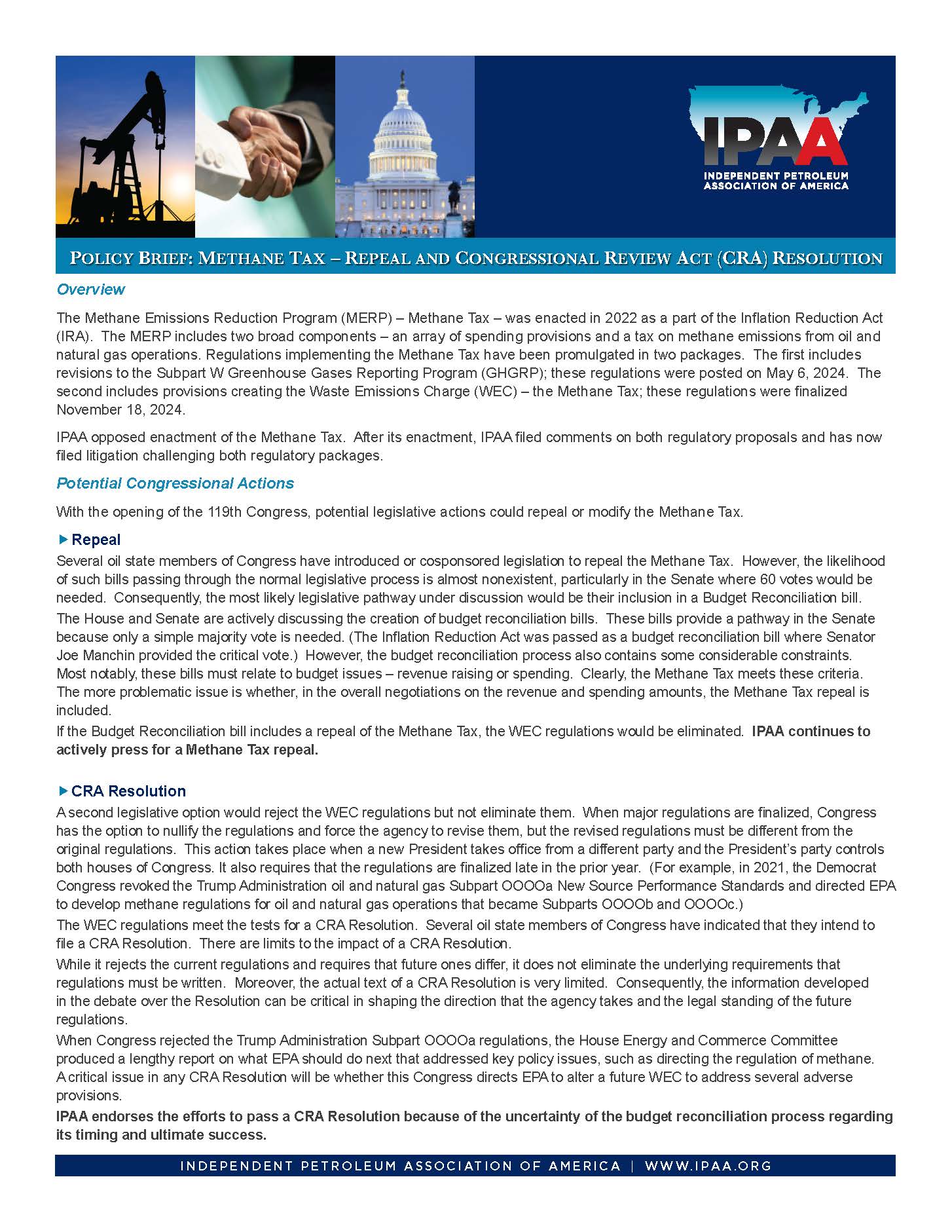
With the opening of the 119th Congress, potential legislative actions could repeal or modify the Methane Tax through the Congressional Review Act (CRA) process.

Read more…

Well structured, cost effective regulations are essential to manage emissions while assuring that American oil and natural gas producers can provide the energy demanded by the U.S. and world economies.

Read more…

Recent Actions and Press Releases

  • “EPA must ensure that the rules and regulations governing stationary sources are clear and durable for our members” WASHINGTON – The Independent Petroleum Association of America (IPAA) released the following statement on the Environmental Protection Agency (EPA) final rule repealing the 2009 endangerment finding. IPAA President......

  • WASHINGTON – Today the Independent Petroleum Association of America (IPAA) sent a letter to the Environmental Protection Agency (EPA) urging the agency to address issues within Subpart W in the Greenhouse Gas Reporting Program (GHGRP) that negatively affect small business, low production well operators. Low production wells are defined......

  • Re: Greenhouse Gas Reporting Rule: Revisions and Confidentiality Determinations for Petroleum and Natural Gas Systems, Docket No. EPA-HQ-OAR-2023-0234 The Independent Petroleum Association of America (IPAA) submits this letter to address uncertainties caused by the underlying reconsideration of Subpart W in the Greenhouse Gas Reporting Program......

  • ...

  • ...

  • IPAA and the Producers Association submitted a letter to EPA this week addressing issues related to the regulation of methane emissions for low production wells. The letter outlines the inefficiencies of methane regulation under the Biden EPA and lays out a framework to manage emissions......

IPAA is the industry’s strongest presence in the nation’s capital and these are important times. The entire oil and gas industry remains under fire from anti-development groups; but with these challenges arise unique opportunities that IPAA is seizing for our members.